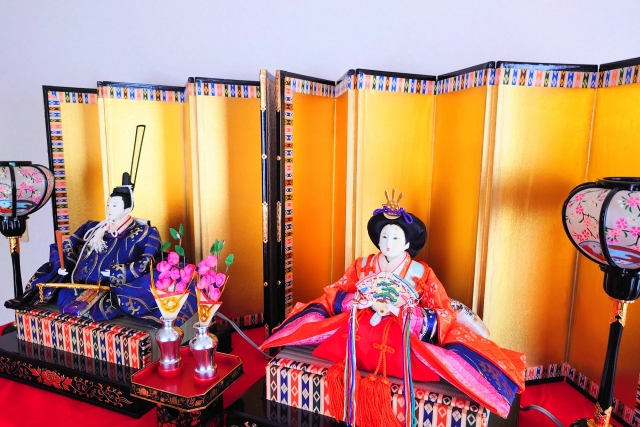
Origin of Hinamatsuri(Girl’s day)
Hinamatsuri is a traditional Japanese festival celebrated on March 3rd. It is also known as Girls’ Day or the Doll Festival.
The origin of Hinamatsuri dates back over 1,000 years to the Heian period. In ancient Japan, people believed that dolls could absorb bad luck and evil spirits. They had a custom called Nagashi-bina, where paper dolls were placed in rivers and floated away to carry away misfortune.
Over time, this tradition changed. Instead of sending the dolls away, families began displaying beautiful dolls in their homes. Today, families with daughters display hina dolls representing the Emperor, Empress, and their court, and pray for the health and happiness of their girls.
Displyaing Ohinasama (Empress doll) at home
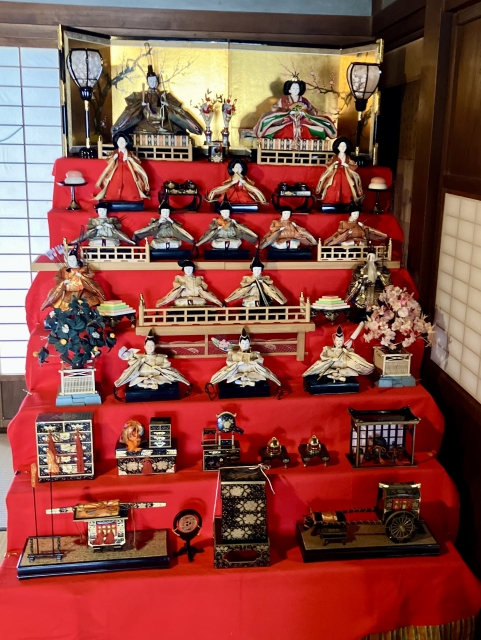
The dolls recreate a wedding celebration in the imperial court.
The seven step Ohinasama is the most traditional display for Hinamatsuri. The very top step is the Odairisama(Emperror) and Ohinasama (Empress).
One step down, are the Sannin Kanjo, the three female court attendants who serve the Empress.
They represent women who worked in the imperial court during the Heian period. Their role was to take care of the Emperror and help with ceremonies and celebrations at the palace. They often prepared and served sake during special events.
In the hina doll display, the three court ladies usually hold different items used for serving sake or presenting offerings. They symbolize attendants who support and assist the Empress.
The five men on the third tier of the display are called the Gonin Bayashi.
They represent musicians who perform music at celebrations in the imperial court. Their role is to provide music for the wedding ceremony of the Emperor and Empress. Each musician plays a different traditional instrument:
The dolls on the fourth tier of the display are called Zuishin, which means imperial ministers or guards.
They represent important officials who served in the imperial court. Their role was to protect and assist the Emperor and Empress.
There are usually two ministers:
- The Minister of the Right (Udaijin) – often shown as a younger man
- The Minister of the Left (Sadaijin) – usually shown as an older man with a beard
They symbolize loyalty and protection for the imperial family.
The dolls on the fifth tier are called Shicho, which means servants or helpers.
These three men represent workers who supported life in the imperial court. Their job was to take care of daily tasks and help with events and ceremonies.
They are sometimes called the “three helpers” and are known for their different facial expressions—one is laughing, one is crying, and one is angry. These expressions are said to represent different human emotions.
In the doll display, they often hold tools used for outdoor work or ceremonies, such as umbrellas, brooms, or dustpans.
Also many miniature items placed on the lower tiers, represent tools, furniture, and gifts used in aristocratic life during the Heian period.
Common items include:
- Miniature furniture – such as chests and cabinets used to store clothes and valuables.
- Carriages (Gosho-guruma) – used by nobles for transportation.
- Food stands and dishes – used for serving special meals during celebrations.
- Tea sets and household items – representing daily life in the palace.
These items symbolize the luxurious lifestyle of the imperial court and are displayed to wish for a girl’s happiness, prosperity, and a bright future.
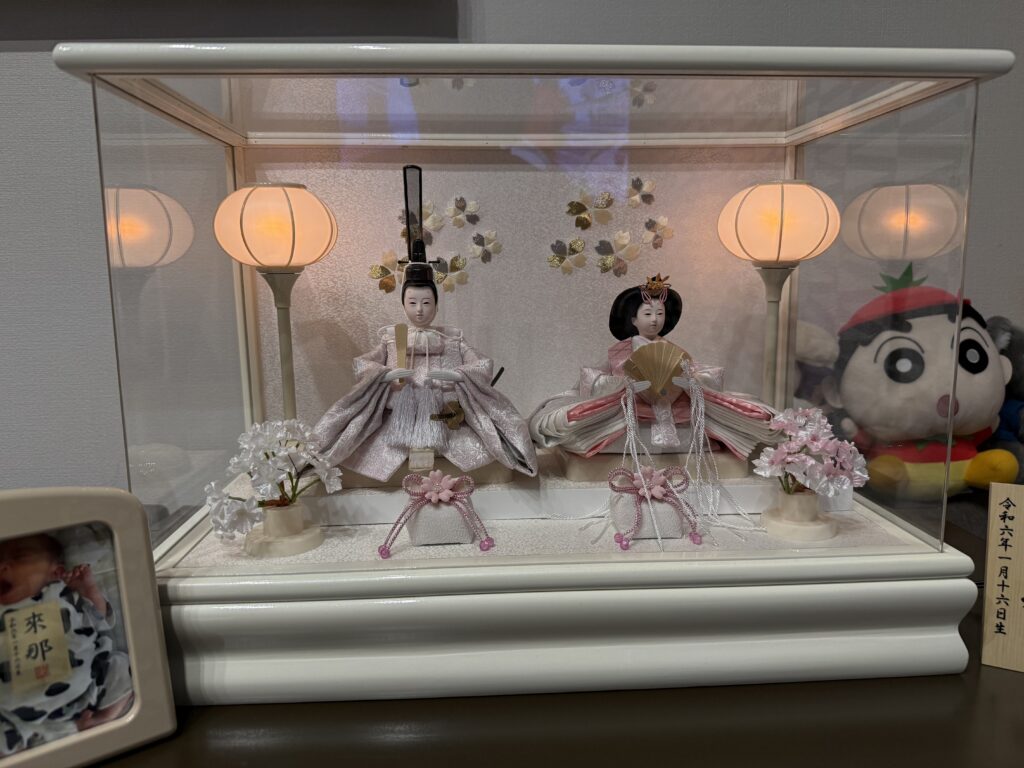
As time goes by, the seven step display is not the most common display since it takes up too much space. My Ohinasama was 7 tiers (45years ago), my daughter’s was 3 tiers, and my granddaughter’s is only of Odairisama and Ohinasama. It’s most common these days, since it’s small, and easy to put away.
Food for Hinamatsuri
During Hinamatsuri, families enjoy several traditional foods to celebrate girls’ health and happiness.
- Chirashizushi
A colorful sushi dish with rice topped with fish, egg, and vegetables. It is often eaten at celebrations. - Hishimochi
A three-colored rice cake (pink, white, and green) that symbolizes health, purity, and new life. - Hina-arare
Small colorful rice crackers that are a popular snack for Hinamatsuri. - Ushiojiru
A clear soup made with clams. The clam shells symbolize a good and harmonious marriage.
These foods are part of the celebration and represent wishes for a girl’s healthy and happy future.